

How a multi-phase CMS migration preserved 15 years of online journalism, solved platform security issues, and delivered a faster, more modern publishing experience for a national news organization.
Project Snapshot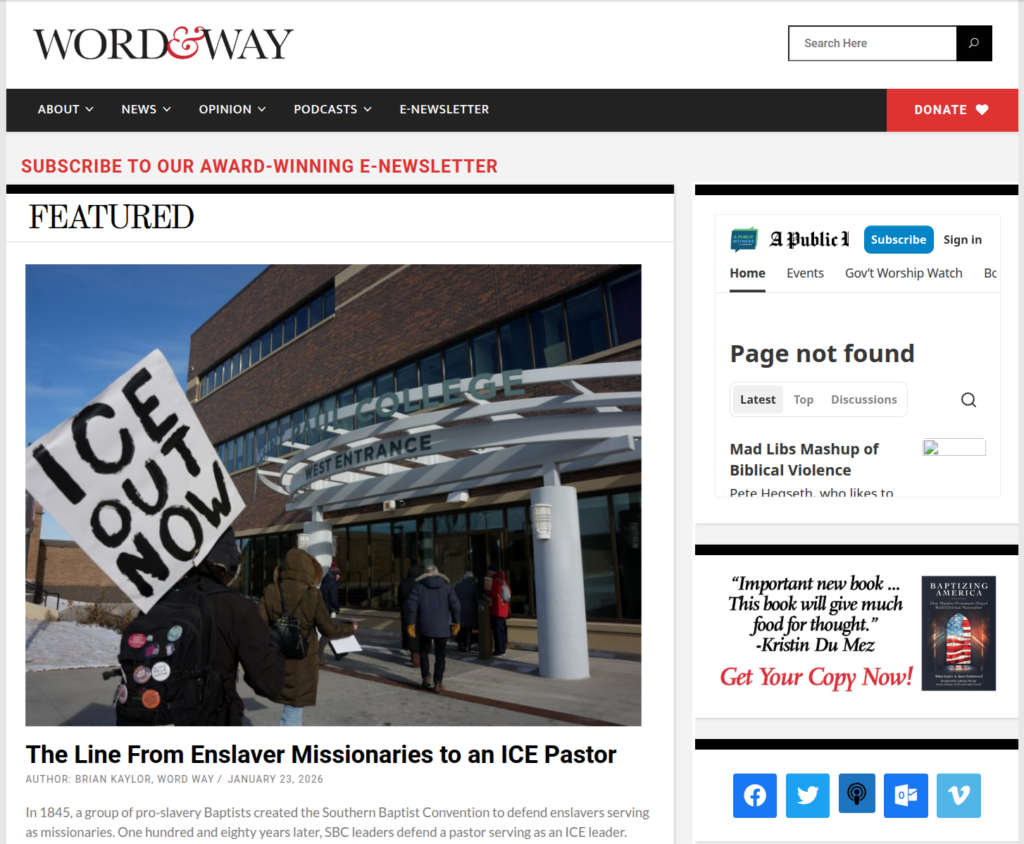
Word&Way is a national news organization with roots dating back to 1896 that has been publishing original journalism online nearly every day since the early 2000s. When I started working with them, their site was running on Joomla 1.0, a content management system that had already reached end of life. The platform was inherited from a previous developer, and over the years it had accumulated nearly 7,000 articles and 8,000 media items dating back to 2004. Moving all of that to WordPress — without losing a single article, breaking a single link, or creating a gap in their daily publishing operation — was the challenge.
The project ran approximately six months from planning through launch. The site has been running on WordPress since January 2019. Word&Way remains a current client today.
View the live site at wordandway.org →
Why the Migration Needed to Happen
Three problems were converging at once, and none of them were going away on their own.
The most pressing was security. Joomla 1.0 had been unsupported for years, which meant no patches, no updates, and a growing attack surface for a site that publishes daily and relies on its credibility. Running a public-facing news site on an end-of-life platform is a real risk, not just a theoretical one.
The second problem was the user experience. The site had never been redesigned for mobile. In an era when the majority of readers consume content on their phones, Word & Way’s site was still built for a desktop world that no longer existed. A responsive redesign was overdue.
The third problem was performance. Years of content growth, combined with aging architecture and a third-party publishing plugin, had created significant load time issues. The site was slow, and slow sites lose readers.
Any one of these would have been a reason to act. Together, they made the case for a full platform migration unavoidable.
The Technical Challenge
Migrating from Joomla 1.0 to WordPress is not a one-step process. There is no direct migration path between those two platforms. Getting the content from point A to point B required moving it through an intermediate stage first.
The migration tools that exist to move content from Joomla to WordPress are built for Joomla 1.5, not Joomla 1.0. So before any content could move to WordPress, it first had to move from Joomla 1.0 to Joomla 1.5. Only after that intermediate migration was complete could the content be transferred into WordPress. That made this a three-platform project spanning two distinct migration phases before we ever reached the final destination.
The K2 plugin in use for publishing added another layer of complexity. K2 is a third-party content component that many Joomla publishers used to manage articles, categories, and media. It stores content differently than Joomla’s native content architecture, which meant the migration tools could not simply map K2 content to WordPress posts in a clean, automated way. Additional steps were required to account for how K2 structured its data before it could be translated into WordPress’s content model.
Even with the right tools and the right sequence, the database still required manual intervention. After each phase, I worked directly in MySQL to update media URLs, reformat database fields for compatibility between the platforms, and resolve issues that automated tools could not handle cleanly. This kind of work requires a precise understanding of how each platform stores and references content in its database, and a willingness to work at a level of detail that goes well beyond what migration plugins can automate.
Planning for a Live Publishing Operation
One of the most important decisions we made early in the project was where to implement content freezes. Word&Way publishes original journalism nearly every day. That means the content in the database is a moving target. Every new article published during a migration phase is an article that either needs to be migrated again or migrated manually after the fact.
We planned content freeze windows at critical transition points in the migration sequence. These were short periods where the team paused new publishing so that the database snapshot I was working with was stable. This discipline significantly reduced the amount of manual catch-up work after each phase and kept the project on a predictable timeline.
It also required clear communication with the Word & Way team throughout the project. They needed to understand what was happening at each stage, when freezes were needed, and what they could expect when the new site launched. Keeping a small editorial team informed and confident during a six-month migration of their primary publishing platform is its own kind of project management challenge.
Protecting Search Equity
A news organization with 15 years of published content has accumulated real search equity. Articles rank in Google. Readers bookmark specific pages. Other sites link to specific stories. Every one of those links points to a Joomla URL, and Joomla URLs look nothing like WordPress URLs.
Without a redirection plan, every one of those inbound links would return a 404 error after launch. That is not just a bad user experience. It is a significant loss of search authority built up over years of consistent publishing.
I developed a comprehensive redirect plan that mapped the old Joomla URL structure to the new SEO-friendly WordPress permalink structure. Every article, every category page, and every archive URL got a redirect. Testing and verifying the redirect implementation was a meaningful phase of the project on its own, requiring systematic spot-checking across article categories, date archives, and legacy URL patterns to confirm that traffic and search equity were flowing correctly to the new URLs.
Media Verification
Migrating 8,000 media items alongside 7,000 articles means there are a lot of places where something can break quietly. An article can migrate successfully and still display a broken image if the media reference in the database points to the wrong path, uses the wrong URL format, or references a file that did not transfer cleanly.
After launch, I conducted systematic testing and troubleshooting across the site to verify that media was loading correctly. This included checking articles across different date ranges and categories, testing on multiple browsers to catch compatibility issues, and resolving the styling and display inconsistencies that surfaced in the days after go-live. Post-launch adjustments are a normal part of any migration of this complexity. The goal is to surface and resolve them quickly so they do not affect the reader experience for long.
The Outcome
Word & Way launched on WordPress in January 2019 with a fully responsive, mobile-first design, a faster and more stable platform, and their entire archive intact. The editorial team was able to begin publishing in WordPress immediately after launch. The transition from their perspective was clean.
The performance improvement was noticeable. Moving from aging Joomla infrastructure to a properly configured WordPress environment on modern hosting resolved the load time issues that had been building for years. The security concerns that come with running an end-of-life platform went away with it.
Since the initial migration, the site has continued to grow. The archive now includes more than 10,500 articles and 12,000 media items. Word & Way has upgraded servers twice since the WordPress launch, and I handled both of those server migrations as well. The ongoing relationship includes site maintenance, performance and SEO monitoring, and technical support when issues arise.
What This Project Demonstrates
Large-scale content migrations require more than technical skill. They require careful sequencing, honest planning about what the tools can and cannot do, and close coordination with the client throughout a process that touches the core of how their organization operates. The Word&Way migration worked because the client collaboration, technical execution, and the project management were treated with equal seriousness.
The site has been running cleanly for more than six years. That is the outcome that matters.
Capabilities Demonstrated
- Multi-phase CMS migration planning and execution
- Joomla to WordPress migration (including legacy Joomla 1.0 environments)
- MySQL database management and manual data editing
- Third-party plugin content migration (K2)
- 301 redirect planning and implementation for SEO preservation
- WordPress theme design and responsive site development
- Media library migration and verification
- Server migration and hosting configuration
- Cross-browser compatibility testing and post-launch troubleshooting
- Long-term site maintenance, performance monitoring, and SEO oversight