
This post is part of a weekly series reviewing higher-education websites through the lens of prospective students and families, focusing on the information they need from a website and how well institutional sites help them find it. Reviews are published in a spirit of collegiality and support. If you notice an inaccuracy or have an issue with a website review, please get in touch.
See more college and university website reviews.
North Dakota State University Website Review
This North Dakota State University website review looks at the undergraduate admissions experience from two vantage points: a high school student deciding where to apply, and a parent trying to understand what it will cost. NDSU makes applying refreshingly simple, with no fee, no essay, and no required test scores, and it publishes its costs in clear, readable tables. The opportunity is alignment. The cost page, the scholarship page, and the net price calculator each describe a different academic year, and a careful family will notice.

North Dakota State University at a glance
- Location: Fargo, North Dakota
- Type: Public land-grant research university
- Founded: 1890
- Total enrollment: 11,952 (fall 2025 census)
- Athletics: NCAA Division I Bison, Summit League (football in the Missouri Valley Football Conference)
Summary of North Dakota State University Website Review
Clear strengths
- A simple, low-barrier application: no fee, no essay, test-optional admission, published GPA and course guidelines, clear deadlines for spring, summer, and fall, and decisions typically within two to three weeks.
- The 2026-27 cost page presents tuition, fees, housing, and meals in HTML tables for five residency groups, including Minnesota, neighboring states and provinces, other U.S. states, and international students, with differential tuition explained in plain language.
- Guaranteed first-year scholarships of $1,000 to $3,000 a year are shown in an accessible table, so a student can find their award tier by GPA in seconds.
- Apply, Visit, and Request Info stay visible on every page, and the admission menu offers clear paths for first-year, transfer, early entry, military and veteran students, and parents and families.
- Lighthouse SEO scores of 100 on all four tests, Accessibility between 96 and 99, and a 99 for Performance on the admissions page on desktop.
Strategic opportunities
- The cost page describes 2026-27, the scholarship page describes 2027-28, and the net price calculator is based on 2024-25 costs. The calculator introduction also refers to “expected family contribution,” a term the FAFSA replaced with the Student Aid Index.
- The cost page lists direct and indirect costs separately but never adds them together, which leaves a parent doing the arithmetic to reach a full cost of attendance.
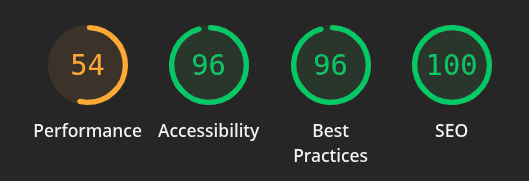
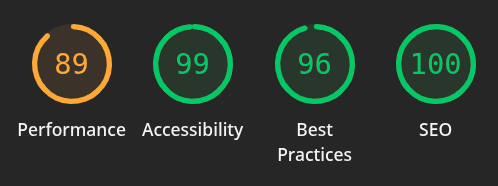
- The home page drops to a Performance score of 54 on mobile, well below the admissions page at 89.
- Older addresses for admissions and financial aid pages remain in search results, so a family searching for answers can land on content from a previous version of the site.

Technical foundations
NDSU runs on Drupal 10, with a component-based page system that gives admissions, cost, and visit pages a consistent structure. Undergraduate applications and inquiry forms run on a Salesforce-based TargetX portal, while international and graduate applicants use a separate portal. Qualtrics powers feedback forms, the virtual tour is hosted on CampusReel, and Google Tag Manager is in place for analytics. Every page carries a “Page Manager” contact and a “Website and Accessibility Feedback” link in the footer, a helpful governance signal that someone owns each page and wants to hear about problems.
Lighthouse results are strong overall, with SEO at 100 and Best Practices at 96 on every test. Accessibility holds at 99 on the admissions page and 96 on the home page. Performance tells a more interesting story. The admissions page scores 99 on desktop and a solid 89 on mobile, while the home page falls from 92 on desktop to 54 on mobile, a 38-point drop. The admissions page shows what this platform can do on a phone; the home page has room to catch up.


Information architecture and findability
The main navigation groups “Admission & Cost” together, which matches how families think: can I get in, and can we afford it? Inside that menu, the admission section offers Requirements, Cost & Aid, Visit, Admitted Students, Parents & Families, Counselors & Advisors, and Contact. The Apply page sorts students by type, with cards for first-year, transfer, early entry, non-degree, international, graduate, adult degree completion, and military and veteran students. There is even a page for applicants who will be under 18 on their first day of classes, a thoughtful touch for families.
The first-year requirements page is a model of clarity. It states a recommended 2.75 GPA, lists the 14 core courses, explains the test-optional policy and how scores are still used for placement, and offers a pathway program with North Dakota State College of Science for students who are not admitted directly. The program finder filters by level, type, format, and keyword, with both visual and text views.
Findability from search is less consistent. Admissions content appears in search results under several addresses, including numbered system paths, older folder structures, and a separate hosting subdomain. Some of these still show earlier versions of pages. Graduate links also point to two different locations depending on where a student starts.
Cost, financial aid, and transparency
Cost is often the center of a family’s decision, and NDSU has much to be proud of here. The cost page states 2026-27 estimates in HTML tables. A North Dakota resident’s direct costs total $23,107; a student from another U.S. state pays $28,337. Minnesota reciprocity, rates for neighboring states and Canadian provinces, reduced rates for children of alumni, and differential tuition for programs such as engineering, nursing, and pharmacy are all explained.
Two small additions would complete the picture. First, indirect costs (books, personal expenses, parking, and residence hall dues, totaling $4,612) appear below the main table but are not added to it. A parent from North Dakota would need to calculate a full cost of attendance of $27,719 on their own. Second, the cost page does not link to the net price calculator, which sits one level up on the Cost & Aid landing page.
The larger opportunity is timing. A family planning for fall 2027 sees 2026-27 costs, 2027-28 scholarships, and a net price calculator built on 2024-25 costs. The calculator’s introduction, both on the NDSU page and in the tool itself, describes an estimate of “expected family contribution,” a term retired when the FAFSA moved to the Student Aid Index. None of this is unusual in a busy aid cycle, but families tend to treat the calculator as the most personal number on the site, and an older year can quietly undercut its credibility.
The guaranteed scholarship grid is a strength. Awards range from $1,000 to $3,000 a year for up to four years, with an alternate route to the top tier through test scores. The page does not say how these awards interact with Minnesota reciprocity or regional exchange rates, a question many out-of-state families will ask.
Accessibility, usability, and inclusivity
Accessibility scores of 96 to 99 reflect real care, and credit is due to the web management team for making this a priority. Cost and scholarship data appear in tables rather than images, which helps screen reader users. Pages include a skip-to-content link, and the mobile menu is built in clear levels. NDSU maintains a digital accessibility policy, and the footer invites accessibility feedback. A direct footer link to the accessibility statement itself would make that commitment easier to find.
The Parents & Families page speaks directly to families early in the search, with essential links, a family email list, and twelve evening information sessions on topics like paying for college and understanding an aid offer. The page notes that the sessions are geared mostly toward families of admitted students, and the list is not in date order, so a parent of a high school junior may need a moment to find what fits.
Executive lens: enrollment, risk, and governance
Enrollment and funnel. NDSU removes nearly every barrier to applying, and the persistent Apply, Visit, and Request Info bar keeps the next step in view. The cost story is competitive, especially for out-of-state students. Aligning the cost tools to one academic year would let that story land with full confidence.
Risk and compliance. Strong accessibility scores and a published digital accessibility policy put NDSU in a good position. The net price calculator is a federal requirement, so keeping it current and using current federal aid terms is worth prioritizing.
Governance and maturity. A modern Drupal platform, a shared component library, and a named page manager on every page are signs of a mature web operation. Older addresses that still appear in search results are a common byproduct of a platform move, and retiring or redirecting them would bring findability in line with the quality of the current site.
Recommendations
- Update the net price calculator to the current cost year and replace “expected family contribution” with “Student Aid Index.”
- Label which entering class each cost and scholarship page serves, so families planning for the same term see matching years.
- Add an estimated total cost of attendance, including indirect costs, for each residency group, and link the net price calculator from the cost page.
- Explain how guaranteed scholarships combine with Minnesota reciprocity and regional exchange rates.
- Bring the home page’s mobile performance closer to the admissions page.
- Redirect older admissions and financial aid addresses to their current pages.
- Add a footer link to the accessibility statement, and list family information sessions in date order.
An invitation to collaborate
This series exists to share what prospective students and families experience on college and university websites, and to celebrate the good work happening across higher education. If your team is weighing similar questions about cost transparency, findability, or the path from first visit to application, a fresh set of eyes can help. For a related example, see the Northwest Missouri State University website review.
Want to work together? Get in touch.
Disclaimer: This review is based on publicly available information at a specific point in time and reflects professional opinion offered constructively. Websites change frequently, and details may have shifted since publication. Institutions are welcome to submit corrections or updates, which will be incorporated promptly.